
Understanding Debt Ratio: Definition, Formula & Examples
A high debt ratio can be a warning sign that a company is taking on too much debt, which can make it more vulnerable to economic downturns or changes in interest rates. On the other hand, a low debt ratio can indicate that a company is not taking full advantage of available financing opportunities. A well-run company makes productive investments that generate good earnings and cash flow returns. A portion of these returns is typically plowed back into investment into new assets. Then the cycle of generating good earnings and cash flow returns on assets begins again. A company with a high debt ratio might be like a person needing to be careful about their health.
- Depending on the type of industry, a high-level DE may be common in some, while a low-level debt ratio may be common in others.
- There are instances where total liabilities are considered the numerator in the formula above.
- Whether debt and liabilities could be treated similarly would completely depend on the elements used to calculate the sum of the debts.
- One must always spend according to what he has and borrow according to what he can repay.
- Therefore, you may be considered a good candidate for a loan or credit.
Which Liquidity Ratio is considered to be the most stringent?
- Lenders use the debt ratio to evaluate a company’s ability to repay its debt.
- Our next step is to delve into industry-specific insights regarding debt ratios.
- This information is often used by investors, analysts, and potential lenders to assess part of a company’s financial health.
- Companies at different stages of growth might naturally have different D/E ratios.
- Investors and analysts often prefer businesses with lower debt ratios, as these firms are less likely to get into financial trouble.
- Negative shareholder equity can lead to financial distress and bankruptcy.
It compares a company’s total debt to its total capital, which is the sum of debt and equity. A high debt-to-capital ratio signifies a company with high leverage, which might be riskier for investors and creditors. The debt-to-assets ratio is a metric that quantifies a company’s total debts in relation to its total assets. It shows the proportion of a company’s assets that are financed by debt. A high debt-to-assets ratio suggests that a company is heavily leveraged, which might increase the risk of financial distress or bankruptcy. From a creditor’s standpoint, the debt ratio is an invaluable indicator of a company’s ability to repay its debts.
Data-driven Banking & Financial Services
- On the other hand, the debt-to-equity ratio focuses on the relationship between debt and equity financing.
- With less debt to pay off, these companies usually bear less financial risk and are likely to withstand economic downturns better than their more leveraged counterparts.
- The debt ratio is important because it indicates a company’s leverage and its level of financial risk related to the amount of money borrowed to fund daily operations.
- An optimal debt ratio isn’t universal—it depends on various factors, including the company’s industry, business model, and market conditions.
- First and foremost, it’s important to understand that a high debt ratio doesn’t necessarily mean that a company is in financial trouble.
- Using market values in the formula can improve the metric, but it’s not always available.
The total liabilities include short-term and long-term debts, along with fixed payments obligations. The given examples illustrate how the debt ratio varies across industries and companies, reflecting the nature of their operations, investment needs, and financial strategies. The interpretation of the debt ratio must consider the industry context and the specific financial dynamics of each company. Companies can compare their debt ratios with industry averages or competitors to gauge their relative financial health and strategic positioning. It doesn’t take into account a company’s profitability, its cash flow, or the quality of its assets. It also doesn’t consider the nature of a company’s liabilities, whether they are interest-bearing or not, or their maturity.
Treasury & Risk

If the company’s earnings fall or interest rates rise, it might face difficulties meeting its debt obligations. Total liabilities refer to all the money a debt ratio of 0.5 indicates: a company owes to its creditors. This covers both current liabilities, such as accounts payable and accrued expenses, and long-term loans, such as bonds payable and long-term loans. This provides a clear indication of the amount of leverage held by a business. The company could be financed by primarily debt, primarily equity, or an equal combination of both.
- The debt ratio is also different from other financial ratios like the quick ratio, the current ratio, and the cash ratio.
- On the other hand, a debt ratio of 1.0 or 100% suggests that all a company’s assets are funded by debt.
- Understanding your industry’s typical debt levels is key to determining a healthy balance sheet.
- Different industries have different levels of debt that are considered normal, so what may be a high debt ratio in one industry may be perfectly normal in another.
- In some cases, a company may have a low debt ratio because it is not taking advantage of opportunities to invest in growth.
- It’s important to compare a company’s debt ratio to others in its industry.
Understanding the Debt Ratio: Definition and Formula
The debt ratio is also different from other financial ratios like the quick ratio, the current ratio, and the cash ratio. These ratios measure a company’s short-term liquidity or ability to meet its short-term obligations rather than long-term financial stability. A debt ratio greater than 1 suggests that a company has more liabilities than https://emigroupus.com/uncategorized/solved-problem-11-2a-cash-dividends-treasury-stock/ assets. This is a sign of high financial risk, as the company is heavily financed by debt. It might face difficulties meeting its debt obligations, especially in times of financial distress.
Current liabilities

By monitoring changes in this ratio, management can assess the impact of financing decisions on the company’s risk profile, profitability, and long-term sustainability. A tangible example of this is the comparison of the debt ratios of two companies in the same industry. Suppose there are two retail corporations, Company A with a debt ratio of 0.4 and Company B with a debt ratio of 0.6.
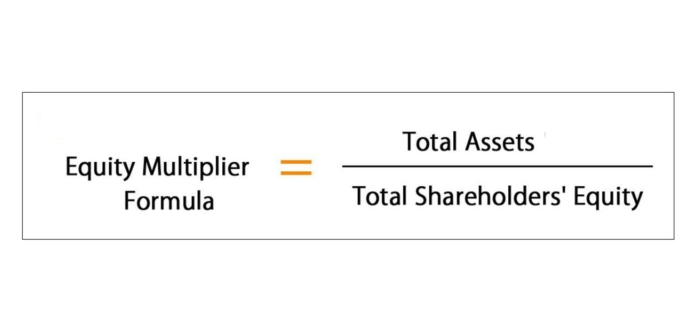
The debt ratio is a crucial financial metric that helps investors and business owners evaluate a company’s financial health. There are several types of debt ratios, including the debt-to-asset ratio, debt-to-equity ratio, debt-to-capital ratio, and debt-to-EBITDA ratio. A higher debt ratio indicates higher financial leverage and risk, while a lower ratio indicates less leverage and more financial stability. For instance, if a company has $500,000 in total debt and $1,000,000 in total assets, the debt ratio would be 50%. A high debt to equity ratio indicates that a company relies more on debt than equity to finance its assets. This suggests that the company is highly leveraged, which can be risky.
Examples of debt ratio for personal and business purposes
This debt ratio is crucial for all stakeholders and holds relevance in finding out the current debt/asset situation of an organization. However, what constitutes a “good debt ratio” can vary depending on industry norms, business objectives, and economic conditions. For instance, startups or companies in rapid expansion phases, too, may have higher ratios as they utilize debt to fund growth initiatives.
At Aspire, we provide a multi-currency Cash Disbursement Journal business account that effortlessly adapts to your specific business requirements. Designed for freelancers and small business owners, Debitoor invoicing software makes it quick and easy to issue professional invoices and manage your business finances. Debitoor accounting and invoicing software gives you the tools to run your business from anywhere, at any time with access from one account across all of your devices.